
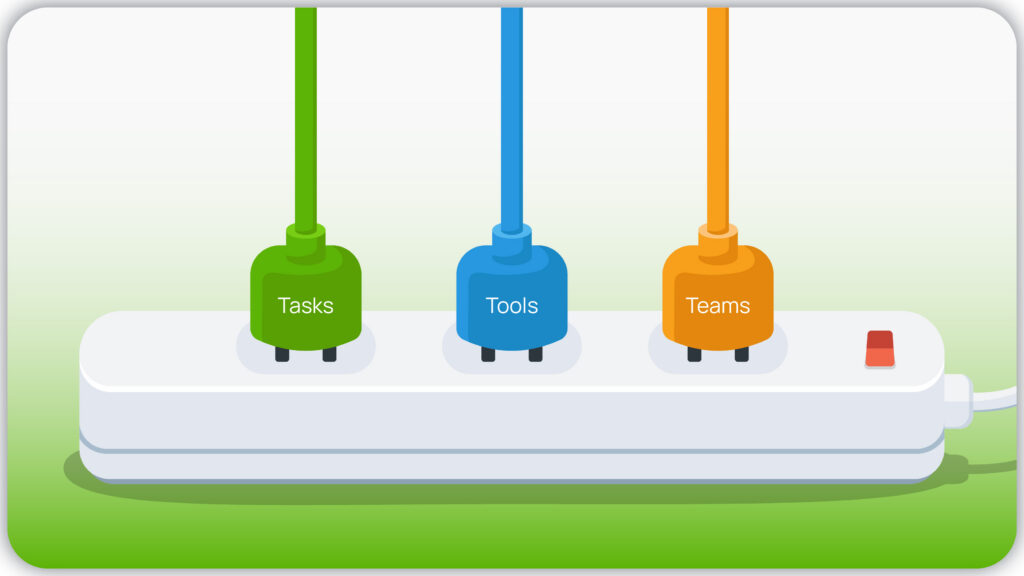
All-in-one operations platforms turn fragmented workflows into a single, synchronized engine
By Scott Schaedle
There’s a hard truth most hoteliers don’t want to admit out loud: Their properties don’t have technology problems; they have fragmentation problems. Too many systems, logins, and platforms that don’t talk to each other. Too many “best-in-class” point solutions that, when stacked together, create something that’s anything but best-in-class.
And in 2026, operators simply do not have the time or the labor to keep playing the patchwork game.
The hotel industry has spent the last decade accumulating tools like souvenirs: One for work orders, another for housekeeping, another for guest requests, another for messaging, another for inspections, another for reporting, and then a spreadsheet (because the tools don’t align), and a group text thread (because the tools aren’t fast enough).
Each system is sold as a solution, but together they create a daily workflow that feels like a scavenger hunt. This is the opposite of what modern hospitality orchestration looks like, where the work flows across the property with minimal friction. The operation isn’t stitched together; it’s designed to run as one.
The cost of that complexity is higher than most hotels realize.
A recent Access Hospitality study found that hospitality managers lose an average of 360 hours per year switching between disconnected systems – roughly 40 full workdays annually per employee. That same research cites 16 percent operational cost waste tied to inefficiencies caused by siloed tech.
This isn’t just a back-office issue. It shows up in the guest experience every day. A missed handoff becomes a delayed room. A delayed room becomes a frustrating arrival and so on, until ending with a review that someone on the executive team reads weeks later and says, “How did this happen?”
Hospitality is not an industry built for disconnected processes. In a hotel, everything touches everything. Mistakes in housekeeping add pressure on the front desk. Ignoring preventative maintenance forces increased capital expenditures. Leadership decisions rely on real-time visibility. Yet too many properties are still trying to run their departments like separate businesses. The tools reinforce it, the workflows complicate it, and friction is normalized.
But normal doesn’t mean sustainable.
In fact, that’s why hotels are starting to make one of the smartest moves they can make in 2026: Consolidating their work into a single platform that unifies workforce communication, software, and operations across the property.
This is about protecting the only thing hotels can’t manufacture: Time. When teams are expected to do more with less, every unnecessary step becomes expensive. Every additional login drags performance down. Every time a staff member asks, “Where do I log that?” or “Who is responsible for this?” the hotel is paying a hidden tax.
That’s why the real goal is to unite all departments in one operational rhythm. When you do so, you remove the confusion that slows everything down.
This isn’t just a hospitality trend either. Across industries, vendor consolidation is becoming the norm because complexity is a business risk. Piper Sandler’s 2023 CIO Survey found that more than half of IT leaders planned to consolidate vendors, with the majority citing cost savings as a motivator. But what they’re really saying is this: Multiple tools multiply problems. And the labor required to manage those problems isn’t scalable.
Hotels are feeling that pressure more intensely than most industries. You can’t automate human service. You can’t outsource guest experience. You can’t shortcut your way to excellence. At some point, finding the “app-for-that” ceases to be a strategy. The real strategy answers this question: How might we remove operational silos so we can better serve our guests?
A hospitality orchestration platform does exactly that. It creates a single source of truth, aligns departments, and makes accountability easier without adding micromanagement. It improves speed and makes training simpler because your staff doesn’t need to memorize multiple interfaces. And it sets hotels up for the future, because AI and real-time analytics can’t thrive in a data environment that’s divided.
It also enables true hospitality at the property level because orchestration requires shared visibility and shared accountability. You can’t conduct a hotel with a dozen systems and no unified workflow. But with hotel operations unification, every department is working from the same playbook, and leadership is managing the operation from one dashboard.
A centralized dashboard gives operators the foundation to scale smarter, not by adding more systems, but by strengthening through subtraction.
Most importantly, it keeps hotels focused on the work that drives results – rooms turned on time, guest requests fulfilled quickly, preventive maintenance completed before failures happen, and leaders seeing what’s happening in real time.
Because here’s the thing: Hotels don’t win in 2026 by adding more tools. They win by making things simpler. They win by reducing complexity. They win by creating clarity, consistency, and visibility across the property.
So if you’re evaluating your strategy for 2026, consider this your wake-up call. The question is no longer, “Which seven tools do we need?” It’s: “How do we stop wasting time managing software and start managing service?”
That’s the real power move.
Scott Schaedle is the founder and CEO of Quore, an Allied Member. Schaedle founded the company to provide a cloud-based service optimization solution for the hospitality industry. As an approved vendor for three of the world’s largest hotel chains, Quore continues to gain momentum by embracing the culture of hospitality in the tech space, with a customer-centric foundation.
Image: Quore
Leave a Reply