
How Indian Americans built the American hospitality industry
By Cathleen Draper
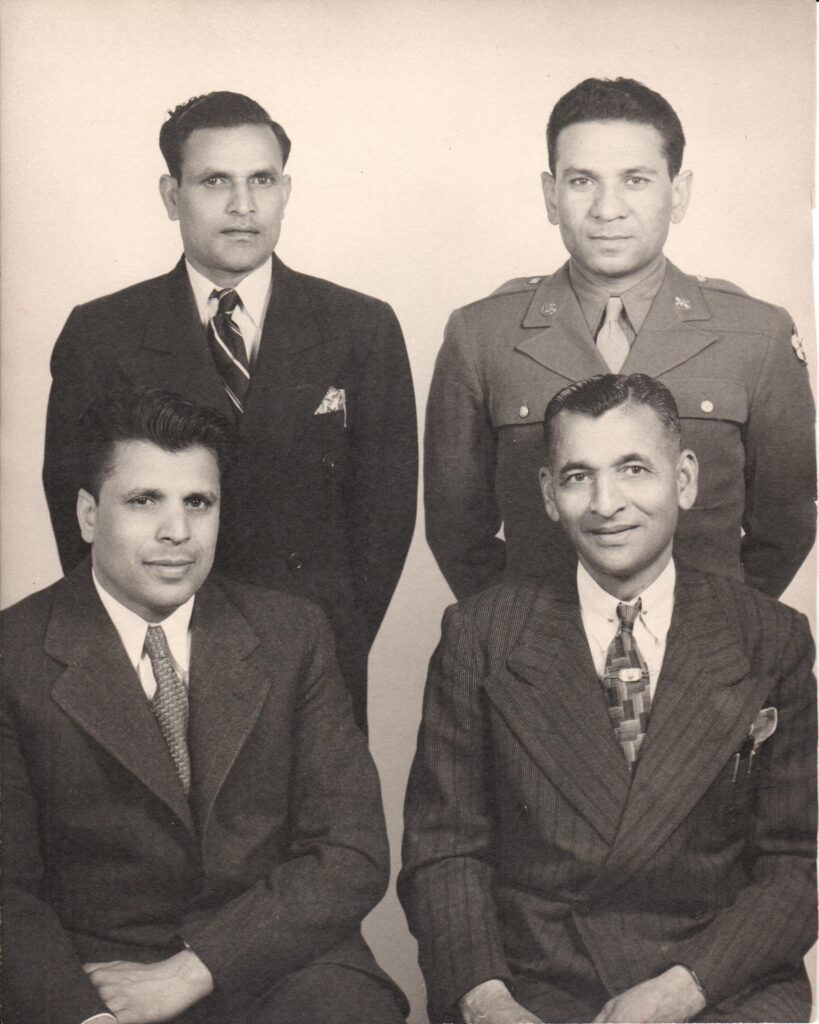
When Kanji Manchhu Desai of Digas, D. Lal of Orna, and Nanalal Patel of Butwada left their villages in Surat, they didn’t dream of America. Instead, Patel ventured to Panama in 1922, while D. Lal and Desai made the journey to Trinidad in 1930, all in the hope of providing for their families at home.
But the money they made was not enough. The trio had heard of America’s economic opportunity, and despite anti-immigrant laws targeting Asians and Indians, they decided to cross the border from Mexico to California in secret. There, they worked on farms outside of Sacramento, until an opportunity arose – one that, though created through unfortunate circumstances, would change the face of hotel ownership in the United States.
During World War II, the American government forcibly relocated Japanese-Americans to internment camps following the attack on Pearl Harbor. The owner of a 32-room hotel in Sacramento asked Desai to run her hotel during her incarceration. With a $350 down payment and $75 monthly rent for five years, he took it on. The Ford Hotel, located on 6th and K streets in downtown Sacramento, would become the first Indian-operated hotel.
When Desai’s responsibilities at the Ford Hotel were complete, he moved to San Francisco, where he leased Hotel Goldfield. In 1946, the U.S. had passed the Luce-Celler Act, opening immigration from India, though with a quota of just 100 per year. Desai welcomed those who made the journey from Gujarat, offering them a place to stay and preaching the power of hotel ownership. He supported fellow Gujaratis with handshake loans – capital to lease or purchase a hotel, with no interest and no repayment schedule.
It was a system that laid a path for success for generations of immigrants to come.
A Formula for Success
The grandfather of Past AAHOA Chairman Mahesh (Mike) Amin (2002–2003) was one such immigrant. In 1952, he came to the U.S. under the quota system with limited English and only a fifth-grade education.
“He was somehow able to get on a boat and travel from India to England, England to New York, and from New York, he took a train to San Francisco,” Amin said.
There, he found the small Indian community and a job, saving money before following Desai’s formula for success.
“The formula was to lease these hotels, then bring your family,” Amin explained. “Your family could work and make enough money to put a roof over your head. If there were any shortfalls, you got a job outside.”
Four years after arriving, Amin’s grandfather purchased a property on Jesse Street – where the San Francisco Convention Center stands today – and called it, fittingly, the Jesse Hotel.
Less than a decade later, the Immigration and Nationality Act passed, allowing hoteliers to sponsor their relatives. Those whose success was sponsored by Desai in turn supported their families, many of whom obtained green cards by investing their savings in hotels and motels. The network of Indian American hotel owners, especially in California, continued to grow.
Those who immigrated in the 1970s followed in their predecessors’ footsteps, though they often called themselves “accidental hoteliers” – engineers, scientists, and doctors who ended up as hotel owners. Until the mid-’70s, they mainly purchased properties in California, especially in the Bay Area; then they expanded south and east.
Ramesh Gokal, a mechanical engineer, came to the U.S. in 1976 on a vacation and chose to stay. Like so many before him, he stayed with family – his wife’s cousin in Berkeley – who convinced him to invest in hotels.
With just under $30,000, Gokal, a charter member of AAHOA, left California to find a property. He went first to Arizona, then rode a Greyhound bus city to city across Texas, contacting brokers along the way. A broker in North Carolina led him to his first purchase: A 26-room motel in Charlotte. His wife and two young daughters eventually joined him.
“This was my first real business, so I not only had to learn the business, but we had to do everything,” Gokal said. “I was renting rooms on credit cards and processing credit cards but had no idea what the process after that was for getting money to my account. From that to cleaning rooms, to dealing with things that we had never heard of. Our hotel had septic tanks. It was two years into operations when we found out that septic tanks had to be cleaned out once a year.”
Living on the property and involving the whole family in operations was a key strategy for keeping costs down, from rent to labor. Amin grew up in an old hotel in San Jose, going to school and returning to take on whatever his father assigned. Those early years honed the entrepreneurial skills he’d later put to use as managing partner of The Amin Group.
“My dad put me in difficult positions and challenged me,” Amin said. “He said, ‘go figure it out.’ I was always in a situation where, if we don’t do it, we may lose money. You don’t want to lose money, especially when money was tight. You had to figure it out.”
A National Movement to Fight Back
Though Gokal and families like Amin’s found success, they also faced rampant discrimination. In the ’80s, non-Indian hotel owners posted signs reading “American Owned and Operated.” Major franchises refused to work with Indian Americans. Insurers refused to cover their properties.
Insurance was a particular sticking point. In the Midwest, when a Patel-owned hotel burned down, the insurance company alleged arson by the owner. A false narrative spread, and in North Carolina, companies canceled coverage for Patels across the state – simply because of their last name.
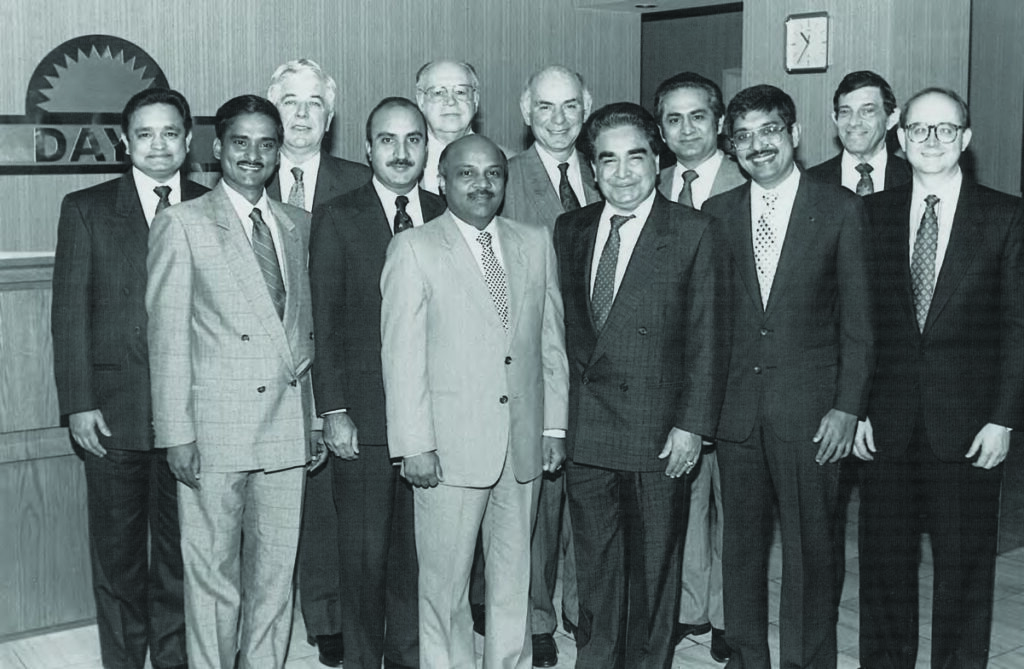
In response, Gokal joined other Indian- American owners to form a state association. Simultaneously, Mike Leven, president of Days Inn, took note of the number of Indian franchisees his company worked with. A Jewish American who had experienced discrimination himself, Leven set out to understand their experiences and debunk the stereotypes against them.
“The general perception was, they run motels, but they don’t run them very well,” Gokal said. Leven’s research found the opposite: Indian American owners worked harder and matched – and sometimes outperformed – White owners across all categories.
Leven and 11 other leaders hosted an informal meeting in Charlotte. Roughly 150 Indian hoteliers gathered, including Gokal.
“That was the beginning of the foundational work to form AAHOA,” Gokal said. Leven and his coalition decided to form a national association to fight discrimination at scale.
“Those guys were pioneers,” Amin said. “They had a big vision, and they wanted to bring the nation together under one umbrella. Mike Leven was their driving force.”
In 1990, AAHOA held its first official convention in Atlanta – just 225 hoteliers. Growth was slow in the early years. Days Inn financially backed the gatherings, while Hasmukh (HP) Rama, Ravi Patel, Nitin Shah, and other early AAHOA Chairmen hit the road on their own dime to recruit members.
“One of the things we as a board in the early days focused on was, how do we show value to the people that join?” Gokal said.
They found a way. From humble beginnings, AAHOA has grown exponentially over 37 years. Today, its 20,000 members own 36,000 – or 60 percent of – American hotels, have contributed more than $371 billion to the country’s GDP, employ over 1 million people, and operate 3.2 million guestrooms.
The American Dream, Still Being Written
For Gokal, the secret to the Indian American hoteliers’ success lies in the particular character of the immigrants who made the journey.
“Most of our ancestors were farmers, and they were not very wealthy,” he said. “Coming to a new country meant you had to succeed, number one.” These ancestors went against the wishes of friends and family, left behind deep social ties, and arrived knowing there was no going back. “Failure is not an option,” he said simply.
Family and community carried them forward. In India, it was common for multiple generations to share a home, and that same closeness translated into a willingness to work side by side and to extend a hand to strangers.
“Even strangers that I did not know would call me and ask me if I could help them out financially because they were buying a motel,” Gokal recalled. “Friendships were developed, and we all understood that we all needed to support each other.”
The deepest pride, he said, is seeing what the next generation has made of that foundation. “The second and third generation are still in the business, but doing business the way many of us hardly imagined when we started.”
The history of Indian American hotel ownership is still being written, Amin noted.
It is precisely that ongoing story that Amin hopes to anchor in a permanent place at the Tenderloin Museum in San Francisco. The forthcoming Indo-American Hotelier History Exhibition is the first permanent exhibit of its kind. It is based on the research of Mahendra K. Doshi, the author of Surat to San Francisco: How the Patels from Gujarat Established the Hotel Business in California 1942–1960.
Developed in partnership with the Indo-American Hotelier Exhibition Funds Development Committee, the exhibit is part of the museum’s expansion into a newly acquired 6,850-square-foot space. Like the accidental hoteliers themselves, it came together, as Amin puts it, accidentally – the product of a single conversation between him and his friend, Randy Shaw, a longtime community activist.
For Gokal, who rode a Greyhound bus across Texas looking for his first motel nearly 50 years ago, the exhibit represents something larger than a commemoration. It is a reminder of the system that made everything possible – and a call to protect it.
“I have lived in South Africa. I traveled through India. I went to school in England for nine years,” he said. “There is nothing like America.”
He paused before adding: “I would almost say that all of us, especially in the hotel industry, have experienced anything beyond our wildest dreams. The American Dream is alive and well.”
Leave a Reply